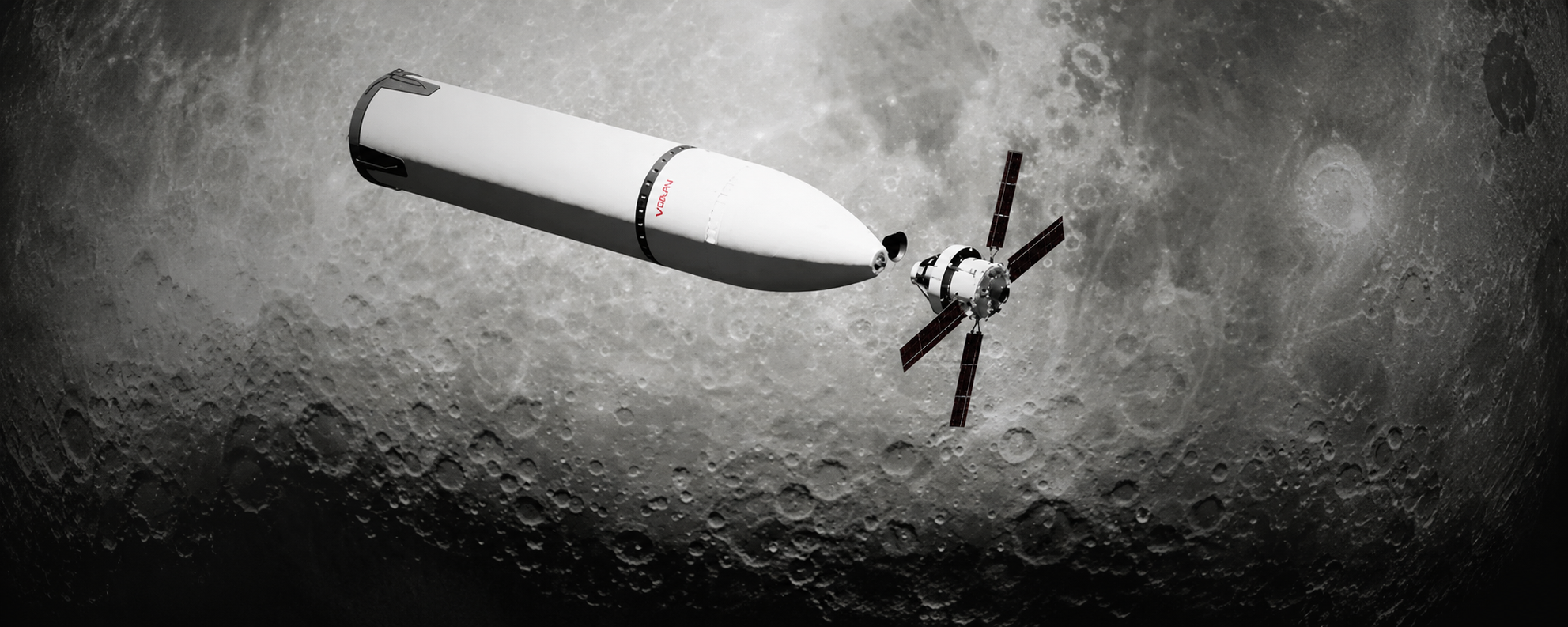
For years, Artemis III had a remarkably simple meaning in the public imagination. Artemis I would prove that the Space Launch System and Orion spacecraft could fly without a crew, Artemis II would put astronauts aboard Orion and send them around the Moon, and Artemis III would complete the sequence by returning Americans to the lunar surface for the first time since Apollo 17. That sequence was repeated so often in NASA presentations, news coverage, educational material, contractor graphics, and public discussions that Artemis III effectively became synonymous with the next American Moon landing. That is no longer the mission NASA is planning. Under the current Artemis architecture, Artemis III is now planned as a crewed low-Earth-orbit demonstration mission in 2027, while the first crewed Artemis lunar landing has been moved to Artemis IV, presently targeted for 2028. The change is more significant than simply moving a landing from one mission number to another, because Artemis III has effectively been transformed into a large-scale systems-integration test for the increasingly complicated transportation architecture NASA intends to use to reach, land on, and eventually sustain operations around the Moon.
NASA’s revised mission plan places four astronauts aboard Orion and launches them from Kennedy Space Center on the Space Launch System, but unlike the Artemis III mission that was described for years, Orion will not perform a translunar injection and head toward the Moon. Instead, the spacecraft will remain in low Earth orbit, where it will conduct rendezvous, proximity operations, docking, crew-transfer demonstrations, extended spacecraft operations, and other tests with commercial Human Landing System hardware being developed by Blue Origin and SpaceX. The significance of that change is easy to underestimate if Artemis III is viewed merely as a lunar mission that has been stripped of its destination. In reality, NASA has turned Artemis III into an opportunity to test many of the interactions that future lunar missions will depend upon while keeping the crew relatively close to Earth. The mission will no longer prove that astronauts can descend to the lunar surface, but it is intended to demonstrate that several independently designed spacecraft, launch systems, contractors, flight-control organizations, communications systems, docking interfaces, software packages, environmental systems, and crew procedures can function as parts of one integrated transportation architecture.
The revised sequence reflects a fundamental reality about Artemis that has become increasingly apparent as the program has matured. Artemis is not Apollo with newer hardware. Apollo concentrated an extraordinary amount of capability into a relatively unified architecture. A Saturn V launched the astronauts, command module, service module, lunar module, propulsion stages, and much of the hardware needed for the expedition as one enormous integrated stack. Artemis is distributed across multiple spacecraft, multiple launch vehicles, multiple contractors, multiple launch campaigns, and potentially multiple pre-positioned vehicles. SLS launches Orion and the crew, Orion serves as the primary crew transportation spacecraft, while commercial companies are responsible for delivering the Human Landing Systems that will carry astronauts between lunar orbit and the surface. Depending upon the specific lander architecture, additional launches may be needed to place hardware or propellant in space before a crew ever leaves Earth. Future missions will introduce still more complexity through lunar-orbit infrastructure, surface systems, communications architecture, logistics, spacesuits, rovers, power systems, international contributions, and commercial services. Artemis III has therefore become the point where NASA begins proving that this distributed system can operate as an actual system rather than as a collection of individually impressive spacecraft.
The mission is expected to begin with a conventional SLS launch carrying Orion and its four-person crew, but even the rocket configuration demonstrates how different Artemis III has become from the lunar mission that previously carried the name. Because Orion is no longer expected to depart for the Moon, NASA has been developing a non-propulsive spacer to replace the Interim Cryogenic Propulsion Stage normally used above the SLS core. That upper-stage propulsion capability is essential when Orion must be accelerated onto a translunar trajectory, but it is unnecessary for a mission designed to remain in Earth orbit. After separation from SLS, Orion’s European-built Service Module will provide propulsion for the spacecraft’s orbital maneuvers and circularization. That is not a minor technical alteration. It physically reflects the change in mission purpose. Artemis III is no longer being configured around the requirement to send Orion nearly a quarter-million miles from Earth. It is being configured around the requirement to place Orion in an environment where NASA can conduct intensive spacecraft integration testing with considerably greater operational flexibility.
That flexibility becomes particularly important because Artemis III is expected to involve more than one commercial lunar-lander test article. NASA’s present architecture calls for Blue Origin and SpaceX hardware to participate in the mission, creating what could become one of the most complicated human-spaceflight integration demonstrations conducted in low Earth orbit. The concept requires commercial vehicles to launch separately from Orion, establish themselves in orbit, complete their own checkout procedures, and then participate in rendezvous and docking operations with the crewed spacecraft. NASA’s descriptions of the mission envision Blue Origin’s hardware being placed in orbit before the crew, where it could remain for an extended period awaiting Orion. After the Artemis III astronauts launch aboard SLS, Orion would maneuver toward the Blue Origin vehicle, conduct rendezvous and proximity operations, and dock with it. NASA has described approximately two days of docked activity with the Blue Origin test article, including the possibility of Artemis astronauts entering the vehicle and evaluating portions of the cabin and crew-support environment.
After completing the Blue Origin phase, Orion would undock and continue independent operations before conducting another rendezvous with a SpaceX Starship test vehicle. That spacecraft would itself have been launched separately and placed into the appropriate orbit for the demonstration. Orion would then perform another series of proximity operations and docking maneuvers, this time with a spacecraft radically different in scale, geometry, mass, propulsion architecture, and operational philosophy from the Blue Origin vehicle. The current plan has described approximately a day of connected operations with the SpaceX test article before Orion separates and eventually prepares for reentry and recovery. The complete Artemis III mission is expected to last roughly two weeks, although its final duration will depend upon launch timing, rendezvous opportunities, hardware readiness, orbital mechanics, and the success of the individual test objectives. What emerges from that mission profile is something fundamentally different from the public image of Artemis III that existed only a few years ago. Rather than one rocket carrying astronauts toward one lunar lander waiting near the Moon, Artemis III is becoming a coordinated campaign involving several launches and several spacecraft that must successfully meet one another in orbit.
The importance of those docking demonstrations goes far beyond proving that two docking rings can physically connect. Orion was originally developed primarily as a deep-space crew transportation spacecraft. Artemis I demonstrated the spacecraft’s ability to operate without a crew on an extended lunar mission and survive high-energy reentry. Artemis II advances that development by carrying astronauts through a lunar flyby mission and testing Orion as an operational crewed spacecraft beyond low Earth orbit. Artemis III adds a different capability set. Orion must perform as an active rendezvous and docking vehicle. It must detect another spacecraft, establish accurate relative navigation, approach it safely, maintain appropriate positioning, maneuver through increasingly close proximity operations, align with the docking interface, establish physical connection, remain controllable as part of a combined spacecraft configuration, and eventually separate safely. Each of those tasks depends upon guidance, navigation, control software, sensors, propulsion, communications, structural interfaces, crew procedures, ground control, abort logic, and the behavior of both spacecraft involved.
NASA has indicated that Orion will operate as the chaser during these demonstrations, meaning Orion will actively maneuver toward the commercial spacecraft that are already positioned in orbit. That is significant because it closely resembles the operational logic expected during future lunar missions. The Human Landing System will not necessarily travel to the Moon attached to Orion. It will be launched and positioned separately, meaning the crewed Orion spacecraft must eventually locate, approach, and dock with the lander before astronauts can transfer into it. Testing that sequence near Earth gives NASA an opportunity to discover problems while recovery options remain far greater than they would be in lunar orbit. A navigation anomaly, control-law problem, communications failure, docking-sensor issue, structural vibration, software conflict, or unexpected spacecraft dynamic may be manageable in low Earth orbit. The same failure hundreds of thousands of kilometers away, immediately before astronauts are expected to descend to the lunar surface, could become mission-ending or life-threatening.
The two commercial lander demonstrations are also valuable because Blue Origin and SpaceX are not building variations of the same spacecraft. Their systems represent very different engineering philosophies. Blue Origin’s Blue Moon Mark 2 architecture is being developed specifically as a lunar lander, while SpaceX’s Human Landing System is derived from Starship, an enormous transportation vehicle whose lunar version represents a dramatic departure from traditional lander designs. NASA therefore gains the opportunity to test Orion against two fundamentally different spacecraft rather than validating a single interface against a single design. Blue Origin’s Artemis III demonstration hardware is expected to reproduce important characteristics of its crewed architecture, including significant avionics, software, control systems, cabin features, and environmental-control equipment. NASA has discussed having crew members enter the Blue Origin test vehicle during the docked phase, which would permit the agency to evaluate not merely docking mechanics but aspects of crew transfer, hatch operations, cabin configuration, environmental behavior, human factors, and the interaction between Orion procedures and a commercial lander.
SpaceX’s demonstration has a different emphasis. The Starship test vehicle is expected to use a configuration representative of the technology path leading toward the future Starship Human Landing System, including a docking interface enabling connection with Orion. The immense size of Starship makes the demonstration particularly useful because once Orion docks with a spacecraft of that scale, the combined system will possess different mass properties and dynamic characteristics than Orion alone. Engineers can model those interactions extensively on the ground, but flight testing remains the ultimate method of determining whether real hardware behaves as expected. NASA can evaluate communications between the vehicles, relative-navigation performance, docking loads, attitude control, structural dynamics, command authority, and the behavior of the combined stack. Current plans do not require Artemis III astronauts to enter the Starship test article, meaning the SpaceX portion of the mission is more heavily focused on spacecraft interaction and integrated flight behavior than on crew habitation.
These demonstrations also illustrate why the new Artemis III should not be understood simply as a competition between SpaceX and Blue Origin to determine which company will receive the lunar landing. NASA has deliberately pursued multiple Human Landing System providers because the agency wants competition, redundancy, technological diversity, and a broader industrial base. Artemis III can therefore be used to retire different categories of risk for different spacecraft. One demonstration may provide more information about cabin operations and crew transfer, while another may provide especially valuable information about controlling a much larger integrated spacecraft stack. Both contribute to the same broader objective, which is ensuring that the systems intended to operate around the Moon have already encountered Orion under actual flight conditions before astronauts depend upon them in lunar orbit.
The revised Artemis III architecture also forces NASA to confront one of the most difficult problems in modern human spaceflight, which is systems integration across organizational boundaries. It is difficult enough to design a spacecraft when one prime contractor controls most of the architecture. Artemis requires hardware developed by NASA centers, major aerospace contractors, international partners, and commercial companies to operate together safely. Orion itself incorporates the European Service Module provided through the European Space Agency. SLS contains major components built across an enormous American industrial supply chain. Blue Origin and SpaceX maintain their own engineering organizations, software, ground systems, communications infrastructure, operational cultures, testing processes, launch vehicles, and control centers. All of those organizations can demonstrate that their individual systems work properly, but that does not automatically prove that the complete Artemis transportation network works properly when the pieces are placed together.
That distinction is one of the most important lessons in complex engineering. Many catastrophic failures do not occur because every individual component is badly designed. They occur at interfaces, where assumptions made by one engineering organization collide with assumptions made by another. A mechanical system may satisfy its own requirements but introduce loads another vehicle did not anticipate. A software system may behave correctly in isolation but interpret information differently from another spacecraft. Communications delays, timing differences, incompatible control responses, sensor biases, thermal interactions, pressure transients, electrical behavior, procedural ambiguity, or simple human misunderstanding can become serious problems when systems are integrated. Artemis III will expose many of those interfaces to actual orbital conditions before NASA attempts to use the same basic architecture around the Moon.
That is why remaining close to Earth should not be interpreted as evidence that Artemis III has become insignificant. Distance is not an adequate measure of engineering difficulty. Two spacecraft traveling in approximately the same orbit around Earth may each be moving at roughly 17,000 miles per hour relative to the planet while nevertheless needing to reduce their relative motion to extremely small values before docking. Achieving that condition requires accurate navigation, carefully designed approach corridors, precisely timed propulsion maneuvers, reliable sensors, control authority, software logic, communications, abort capability, and coordination between crews and controllers. The final docking maneuver may occur at extremely low relative speed, but arriving at that condition is the result of a complex sequence that must work correctly from beginning to end. Low Earth orbit provides the ideal environment for testing those capabilities because it combines genuine operational difficulty with comparatively rapid access to Earth if something goes wrong.
The mission will also serve as another major Orion developmental flight. Artemis II demonstrates crewed operation during a lunar flyby, but Artemis III is expected to keep astronauts aboard Orion substantially longer and subject the spacecraft to a different operational workload. Life-support equipment will operate over a longer period, the crew will conduct repeated orbital maneuvers, docking operations will require active control, and Orion will function as part of multiple combined spacecraft configurations. Communications and crew procedures will be exercised under circumstances different from Artemis II, and NASA will continue accumulating operational experience with a spacecraft intended to become the crew transportation backbone of the Artemis campaign. Orion’s heat shield, environmental systems, propulsion, avionics, communications, guidance, power systems, and crew accommodations all benefit from additional flight experience before the program begins conducting repeated lunar landing missions.
This approach resembles one of the most important lessons of the Apollo era even though the architecture itself is very different. Apollo did not emerge fully formed and immediately attempt a lunar landing. Mercury and Gemini developed much of the operational knowledge required for human spaceflight, including long-duration missions, extravehicular activity, orbital maneuvering, rendezvous, docking, and precision reentry. Apollo itself progressed through increasingly ambitious missions before Apollo 11 attempted the landing. Modern NASA already possesses decades of rendezvous and docking experience from Shuttle, the International Space Station, Commercial Crew, cargo spacecraft, and international vehicles, but Artemis introduces new hardware combinations that have never flown together. Experience with Dragon docking to the International Space Station does not automatically validate Orion docking to Blue Moon or Starship. The physics may be understood, but the specific vehicles, interfaces, software, control laws, sensors, mass properties, procedures, and failure modes remain unique.
Seen in that context, Artemis III has effectively become a rehearsal for Artemis IV. Under the current architecture, Artemis IV is expected to carry out the first crewed Artemis landing at the lunar South Pole in 2028. By that point the program will need much more than a functioning SLS and Orion. The selected Human Landing System must be ready, positioned appropriately, and capable of supporting astronauts. Orion must travel to lunar space, rendezvous with the lander, complete docking, support crew transfer, remain operational while the surface mission is underway, receive the returning astronauts, separate from the lander, depart lunar space, and return the crew safely through Earth reentry. Every docking problem discovered during Artemis III is therefore a problem that does not have to be discovered during Artemis IV. Every software discrepancy, communications issue, unexpected structural response, procedural weakness, or human-factors problem identified near Earth can potentially be corrected before astronauts face the same situation in lunar orbit.
The architecture change also explains why there continues to be widespread confusion about Artemis III. For years, NASA officially described it as the return-to-the-Moon mission. Entire generations of NASA graphics showed Artemis III astronauts walking near the lunar South Pole. News organizations published thousands of stories identifying Artemis III as the first crewed lunar landing since Apollo. Contractors developed animations depicting Orion meeting a Human Landing System near the Moon before astronauts descended to the surface. Educational programs, museum exhibits, documentaries, policy discussions, congressional hearings, and public presentations repeated the same sequence. Much of that material remains online, meaning anyone searching for information about Artemis III can easily encounter an older version of the program and reasonably conclude that the mission still represents the next lunar landing. The mission name remained the same while the mission itself changed underneath it.
NASA’s current architecture should therefore be described with much greater precision. Artemis II remains the first crewed flight of the Artemis program and is intended to validate Orion with astronauts during a lunar flyby. Artemis III, rather than landing astronauts on the Moon, is now intended to perform an extensive crewed low-Earth-orbit demonstration involving Orion and commercial Human Landing System hardware. Artemis IV presently carries the responsibility for the first crewed Artemis lunar landing. Later missions are intended to expand surface operations, incorporate additional infrastructure, and gradually move the program toward more frequent lunar missions. Anyone continuing to describe Artemis III simply as “the mission that will return Americans to the Moon” is describing the architecture NASA previously intended to fly, not the architecture NASA currently presents.
The change is important because it reveals what the Artemis program has actually become. During its earliest years, Artemis could still be discussed publicly as a relatively straightforward continuation of the Apollo objective: build the rocket, build the spacecraft, build the lander, and return astronauts to the Moon. The mature architecture is considerably more complicated. Artemis is attempting to create an entire transportation network extending from launch pads on Earth to lunar orbit and eventually to sustained activity on the surface. SLS, Orion, commercial landers, commercial launch vehicles, international hardware, docking systems, communications networks, navigation systems, spacesuits, surface vehicles, scientific equipment, logistical support, and future infrastructure must eventually function together. The engineering challenge is no longer simply producing machines powerful enough to reach the Moon. It is making an expanding collection of independently developed machines behave as a coherent system.
That complexity represents both the promise and the vulnerability of Artemis. A distributed commercial-government architecture allows NASA to take advantage of technologies and industrial capacity that did not exist during Apollo. It encourages competition, creates opportunities for reusable vehicles, allows commercial launch systems to perform missions once reserved for government rockets, spreads development across multiple companies, and can theoretically produce a transportation system capable of evolving far beyond a handful of isolated expeditions. At the same time, every additional spacecraft, launch, rendezvous, contractor, software interface, fueling operation, docking sequence, and organizational boundary introduces another dependency. A mission can be delayed even when Orion is ready if the lander is not ready. A lander can be ready while its launch system is not. A docking system can function mechanically while software integration remains incomplete. A schedule based on several independently developed vehicles is only as resilient as the least mature critical element.
Artemis III is now designed to confront that reality directly. It is a mission built around integration rather than destination. There will be no lunar footprint associated with Artemis III under the present plan, no astronaut descending a ladder onto the South Pole, no new American flag standing on the surface, and no photograph comparable to the iconic images produced by Apollo. From the standpoint of public spectacle, that inevitably makes the revised mission appear less dramatic than the lunar landing once attached to its name. From the standpoint of engineering, however, the mission may prove considerably more important than its low-Earth-orbit destination suggests. If Artemis III succeeds, NASA will have demonstrated that Orion can launch with a crew, remain operational for an extended mission, conduct rendezvous and proximity operations, dock with commercial spacecraft developed by separate companies, function as part of different combined spacecraft configurations, support crew interaction with commercial lander hardware, undock safely, repeat major portions of the process with another spacecraft, and return its astronauts safely to Earth.
Just as importantly, NASA will have demonstrated that the organizations behind those machines can operate together. Flight controllers, launch teams, spacecraft operators, recovery forces, contractors, engineers, communications networks, mission planners, and commercial partners will be required to execute a coordinated campaign rather than a collection of independent tests. That may ultimately be the most important accomplishment of the mission because the long-term success of Artemis depends less upon whether any one company can build an impressive spacecraft than upon whether NASA can integrate an entire ecosystem of spacecraft into a reliable human transportation system.
Apollo proved that the United States could send human beings to the Moon and return them safely to Earth. Artemis is attempting something related but fundamentally different. Its stated purpose is not merely to recreate a few extraordinary lunar expeditions but to establish a repeatable framework for sustained exploration, commercial participation, scientific operations, and eventually a more permanent human presence beyond Earth. That requires an architecture that can survive repeated missions, incorporate new vehicles, support multiple providers, and evolve over time. Such an architecture is necessarily more complicated than the one used to accomplish Apollo’s singular geopolitical objective, and that complexity must be tested somewhere before astronauts depend upon it at the Moon.
That is what Artemis III has become. The mission most people still associate with the name no longer exists in its original form. The lunar landing has moved to Artemis IV, while Artemis III has been repurposed into the flight where NASA intends to prove that the machinery behind the next era of American lunar exploration can actually work together. It may not produce the historic photograph of the first American boot returning to lunar soil, but it could determine whether that photograph is possible at all. Before Artemis can become a sustained lunar program, NASA must demonstrate that Orion, commercial landers, launch vehicles, software, docking systems, crews, and ground organizations can function as one architecture. Artemis III is now the mission designed to answer that question.